
The Byron Bay Butcher - When Paradise Hides Predators
Fifty-three people. Vanished. Most never found.
The stretch from Byron Bay to Grafton looks like every Australian tourism brochure ever printed. Pristine beaches. Lush hinterland. Hippie markets and wellness retreats.
And a body count that would make most cities nervous.
But nobody wants to talk about it. Bad for tourism. Bad for property values. Bad for the carefully crafted image of coastal paradise.
The Invisible Crime Scene
Here's what law enforcement won't say in press conferences: when there's no body, there's no crime scene. No forensics. No cause of death. No witnesses worth interviewing. Just families with missing person reports and detectives with cold case files gathering dust.
NSW Parliament records list over 50 unsolved disappearances and murders spanning from the 1970s to the 2000s along the North Coast corridor from Byron Bay north to the Queensland border and south toward Coffs Harbour.
Most victims are women. Many were hitchhiking. Some were locals. Others were travelers passing through. All vanished without useful witnesses. Without bodies. Without answers.
The cases sit in filing cabinets. Digital databases. Cold case units that lack resources to actively investigate crimes from 20, 30, 40 years ago.
Families wait. Hope fades. Anniversaries pass. Media stops calling.
Meanwhile somewhere in Byron Bay's hinterland or along forgotten bush tracks, evidence remains buried. Literally.
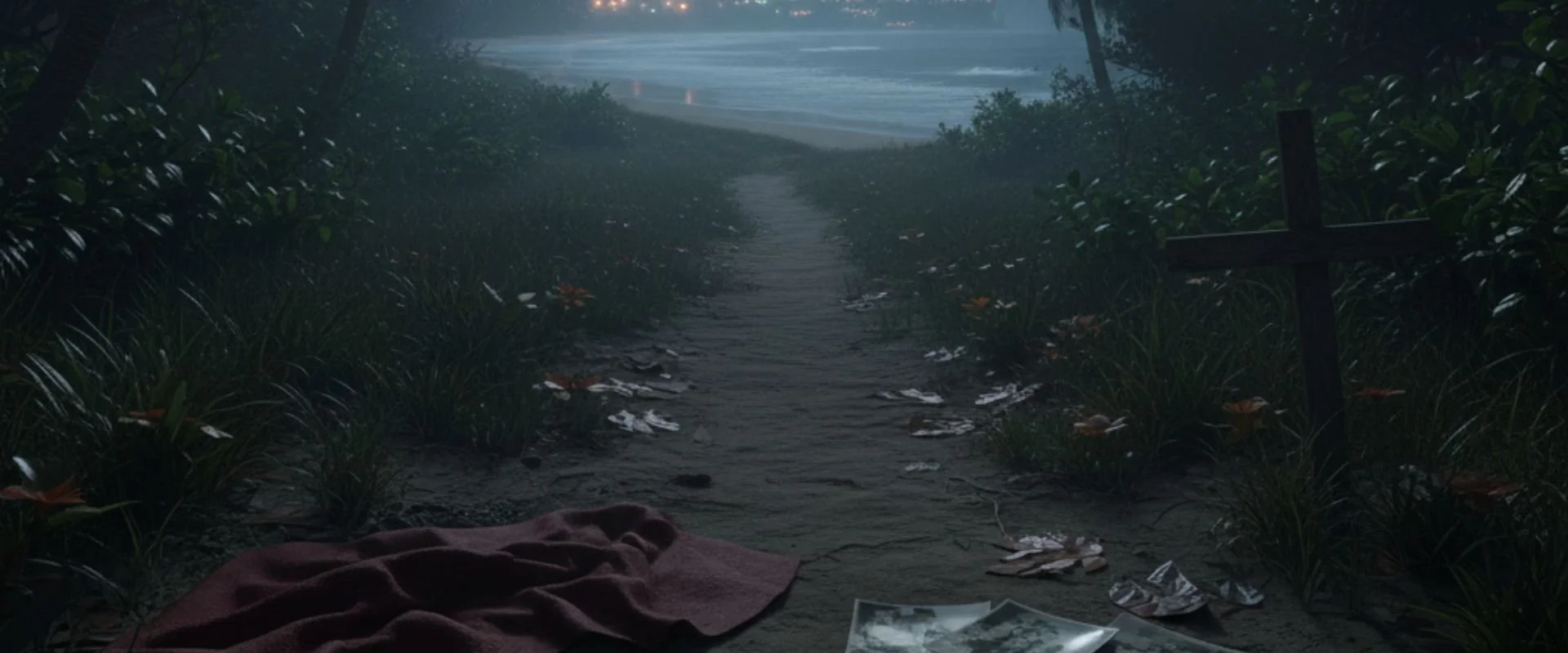
The Single Killer Theory (Probably Wrong)
Media loves the "Byron Bay Butcher" narrative. One predator. Decades of hunting. Single signature killer methodically working the North Coast.
Makes for compelling headlines. Simple story. Clear villain. Satisfying if someone eventually gets caught.
Problem is the evidence doesn't support it.
Criminologist Dr. Xanthe Mallett publicly dismantled the single-killer theory. Time span too long. Victim profiles too varied. Methods too different in cases where bodies were recovered.
Some victims beaten. Others sexually assaulted. Some carefully concealed. Others dumped carelessly.
No consistent modus operandi connecting all cases. No signature elements appearing across decades. No behavioral patterns suggesting single offender.
More likely? Multiple predators operating over multiple decades. The North Coast wasn't hunting ground for one monster. It was hunting ground, period.
Perfect combination of opportunity, geography, and investigative gaps creating environment where predators could operate with minimal risk.
When Bodies Tell Stories
The cases where remains were found paint ugly pictures. Violence. Sexual assault. Brutality suggesting rage or sadistic motivation.
Lee Ellen Stace, 1997. Sixteen years old. Worked at Bilo supermarket in Greenwell Point. Murdered after finishing shift. Beaten to death with timber plank. Body found in bushland south of her parents' house.
Investigation revealed she'd been followed from work. Stalked. Attacked. Killed with extreme violence.
Twenty-eight years later, case remains unsolved. $1 million reward still active. No arrests. No justice.
Lois Roberts, 1998. Hitchhiking outside Lismore. Abducted. Sexually assaulted. Mutilated. Remains recovered in bushland.
Geoffrey Robert Howe eventually convicted. But questions remain. Some investigators believed Howe wasn't working alone. That Roberts' death connected to other unsolved cases.
Howe died in prison 2009. Took his secrets with him.
Harmony Bryant, 2003. Found with severe burns in Bonny Hills. Initially classified as accidental death. Coronial inquest eventually ruled murder based on burn patterns inconsistent with accident.
Someone set Harmony Bryant on fire. Deliberately. Then let her die.
No arrests. No suspects. No justice.
Theo Hayez, 2019. Belgian backpacker. Disappeared from Byron Bay. Phone tracking showed unusual movement pattern through bushland. Body never found.
Inquest determined death. Manner undetermined. Could be accident. Could be foul play. Evidence insufficient to conclude definitively.
Family still searching for answers.
Those are the cases with bodies. Or with enough evidence to determine foul play. Most families don't even get that.
The Hitchhiking Corridor
1970s and 80s. Before mobile phones. Before GPS tracking. Before anyone thought twice about getting into stranger's car on Pacific Highway.
Hitchhiking was normal. Expected. How young people traveled when they couldn't afford cars or buses.
The Pacific Highway was conveyor belt. Backpackers traveling between Sydney and Brisbane. Young women heading between coastal towns for work. Travelers exploring alternative lifestyle communities that attracted them to Byron Bay and Nimbin.
Perfect victim pool for opportunistic predators with local knowledge.
Drive the route today and you'll see why it worked. Long stretches between towns. Dense bushland on both sides. Hundreds of dirt tracks leading into state forests. Logging roads. Fire trails. Access routes used by farmers and forestry workers.
Dump a body twenty meters off the road and it might never be found. Concealment takes minutes. Recovery requires massive search operations that might never happen if nobody reports victim missing immediately.
Some victims were travelers. No family expecting regular contact. Could be days or weeks before anyone noticed they were gone. By then trail completely cold.
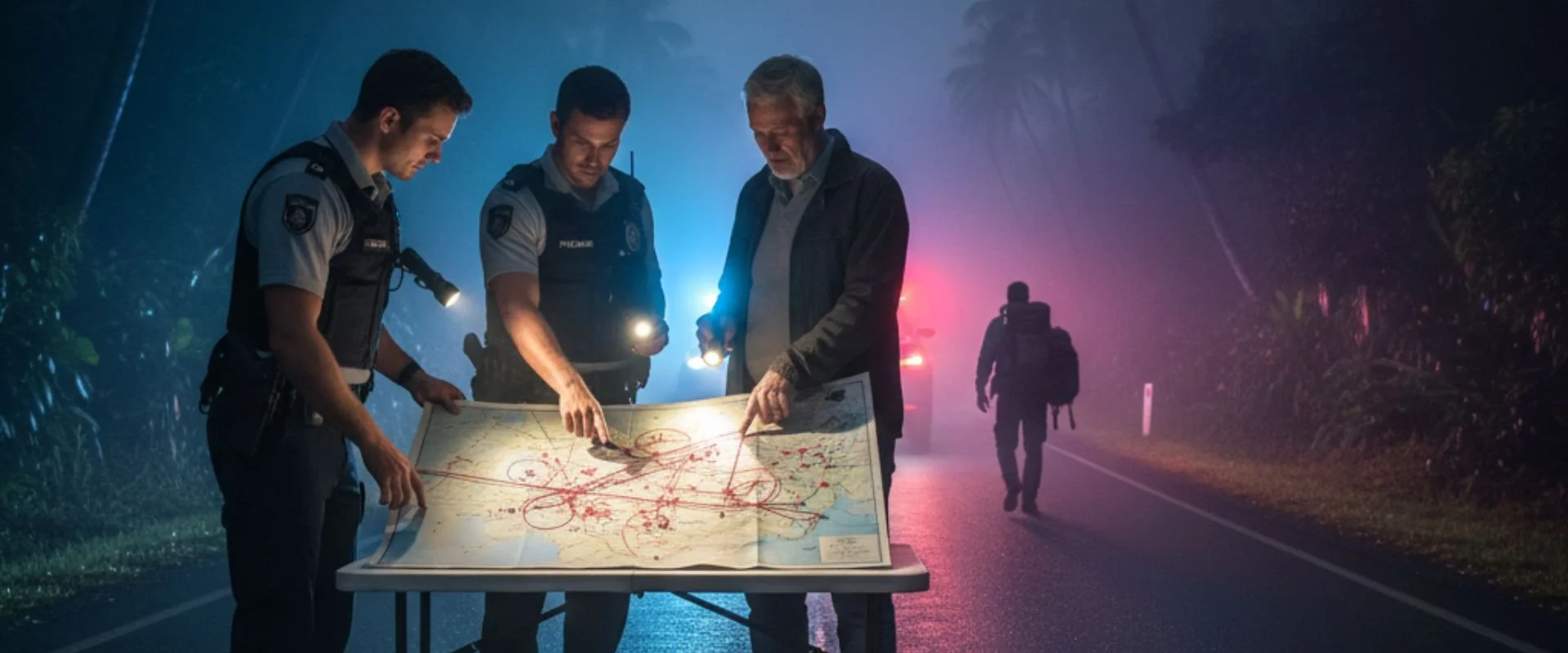
What Mort Would See
In the Mortice books, Mort approaches cases like tactical operations. Map the patterns. Identify the hunting grounds. Understand predator's methodology.
Apply that lens to Byron Bay cases and patterns emerge:
Geographic clustering around specific highway sections. Most disappearances within 50-kilometer corridor. Not random. Suggesting local knowledge rather than passing offenders.
Temporal patterns showing activity spikes during summer months. Tourist season. More potential victims. More strangers. Less suspicious for unfamiliar faces to be around.
Victim selection indicating surveillance and planning, not random opportunity. Women traveling alone. Hitchhiking specific sections. Staying at certain backpacker hostels.
Someone watching. Waiting. Selecting.
Probably multiple someones over the decades.
The Investigative Gap
Critics argue fragmented case management let patterns go unnoticed. Different jurisdictions. Different eras. Different investigators with different resources and priorities.
Byron Bay sits near NSW-Queensland border. Jurisdictional complexity creating coordination challenges. Cases falling through gaps between agencies.
Plus historical investigative standards. 1970s forensics vastly inferior to current capabilities. Evidence collection methods inadequate. Witness interviews not recorded. Chain of custody issues.
Early cases never properly worked. By time cold case units formed with modern resources, evidence degraded. Witnesses dead or unreachable. Memories faded.
No centralized task force connecting dots until decades later. NSW Police eventually established Strike Force Emblems reviewing unsolved North Coast homicides. But resources limited. Active cases taking priority over historical cold cases.
The Political Dimension
Several NSW politicians called for public inquiry into North Coast cold cases. Jeremy Buckingham particularly vocal demanding answers for families.
Police resistance to inquiry. Arguments that investigation ongoing. That public inquiry would compromise active cases. That resources better spent on current investigation than historical review.
Premier Chris Minns rejected inquiry calls 2024. Stated confidence in police investigation. No additional inquiry needed.
Families disagree. Argue systemic failures require independent review. That police investigating themselves creates conflict of interest. That transparency and accountability demand public examination.
Political stalemate continues. Meanwhile cold cases stay cold.
The Byron Bay Image Problem
Byron Bay markets itself as wellness destination. Yoga retreats. Organic cafes. Beach lifestyle. Alternative spiritual communities.
Dark underbelly complicates that marketing.
Tourism industry doesn't want headlines about serial predators and unsolved murders. Property developers don't want buyer concerns about safety. Local business interests prioritize economic growth over historical justice.
Tension between acknowledgment and silence. Between truth and tourism dollars.
Families demanding answers. Media occasionally interested. Politicians making statements. Then everyone moves on.
Meanwhile Byron Bay continues selling paradise. Just don't look too closely at what's buried in the hinterland.
The Mortice Connection
A.J. Wilton didn't invent Queensland's criminal darkness. He just gave it protagonist who fights back.
Byron Bay sits just across NSW border from Queensland. Close enough that Mort's operational territory extends there. Close enough that A.J. Wilton's 45 years observing the region provides intimate knowledge.
The Mortice series works because it's grounded in this reality. Real places. Real patterns of crime. Real failures of systems designed to protect people.
Mort operates in the gaps where official investigations stall. Where jurisdiction boundaries create blind spots. Where bureaucracy protects the guilty more effectively than the innocent.
The fictional cases Mort investigates could be real. The criminal methodologies match actual patterns. The corruption and institutional failure mirror documented problems.
That's uncomfortable for readers expecting pure escapism. But it's why the series resonates.
Modern Technology Changing the Equation
Contemporary investigative tools offer hope for cold cases. Familial DNA analysis. Advanced forensic testing on degraded samples. Digital reconstruction of crime scenes. Geographic profiling using sophisticated algorithms.
Some NSW North Coast cases being reexamined with modern methods. DNA samples run through expanded databases. Genetic genealogy techniques identifying potential suspects through distant relatives.
Lee Ellen Stace case saw renewed focus 2022. $1 million reward increased. Public appeal for information. DNA testing on preserved evidence.
Still unsolved. But active investigation continuing.
Technology helps. But requires resources. Political will. Public pressure maintaining focus.
What Needs to Happen
Centralized task force with cross-jurisdiction authority. Unifying NSW North Coast and adjacent Queensland data. Reauditing historical "non-suspicious" coastal deaths for missed homicide flags.
Linkage analysis across all cases. DNA testing. Geographic profiling. Behavioral analysis. Looking for patterns individual investigations missed.
Adequate resourcing. Can't solve 50-year-old cases with skeleton crews working part-time. Requires dedicated investigators. Forensic specialists. Budget for testing and travel.
Political support. Inquiry or not, families deserve answers. Resources should follow that commitment.
The Families Still Waiting
Behind every statistic is family. Parents who lost daughters. Siblings who lost sisters. Children who lost mothers.
Fifty-plus families still waiting for answers that probably won't come.
Some maintain hope. Others accepted they'll never know what happened. All deserve truth.
Still Unsolved. Still Hunting.
Those 50-plus cases? Most remain open. Most will never close.
Active investigation on handful. Rest collecting dust in cold case units that lack resources for comprehensive review.
Meanwhile somewhere along that beautiful, deadly coastline, evidence still buried. Maybe bones in shallow graves. Maybe items buried with victims. Maybe forensic traces waiting for someone to look in the right place.
Paradise has body count. Queensland knows it. NSW knows it.
Question is whether anyone's still paying attention.
Or whether Byron Bay's carefully maintained image matters more than uncomfortable truth.
Related Reading:
When Christmas Goes Criminal: Queensland's Festive Season Felonies
Mort's Queensland: The Real Locations Behind the Fiction
Justice Mort Style: Why Vigilante Fiction Resonates in 2025
Inside the Queensland Police Corruption That Mort Fights
Discover how Mort confronts the darkness hiding in Australia's most beautiful places. Start the Mortice series with "You Killed My Wife" and experience crime fiction grounded in confronting reality. [Begin Reading Now →]