
7 Crime and Thriller Trends That'll Dominate 2026 (And Why Aussie Readers Should Care)
New year, new bodies. Well, fictional ones anyway.
2026's shaping up to be a cracker for crime and thriller fans. The genre's evolving faster than a crook changing alibis, and if you're not paying attention, you'll miss the good stuff. Let me walk you through what's coming down the pipeline and why it matters for your next page turner.
1. Military Thrillers Are Making a Comeback (Finally)
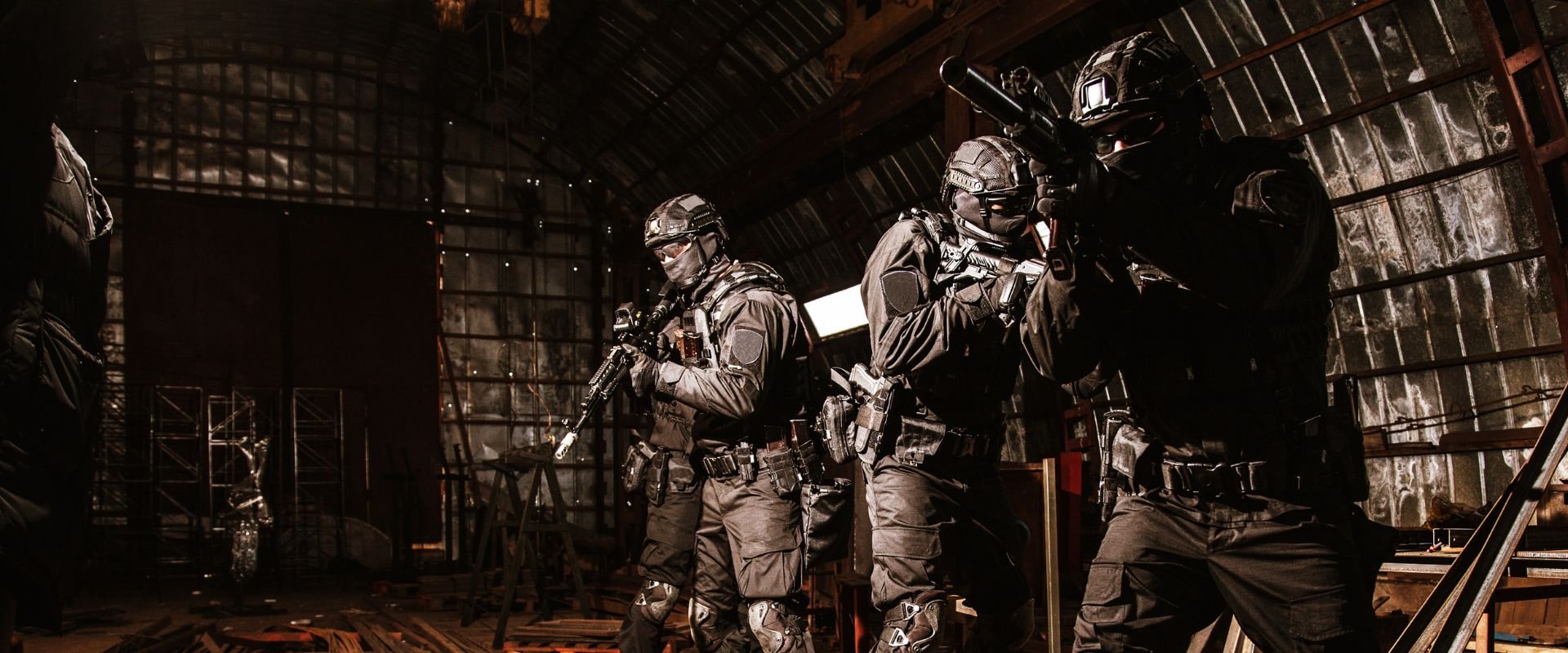
Remember when military thrillers dominated the shelves? They're back, but with a twist. Modern military thrillers aren't just about massive international conspiracies. They're about veterans returning home, navigating civilian life, and discovering that the real battles often happen in their own backyards.
Think tactical operations meet domestic crime. Special forces training applied to local corruption. Military grade intelligence gathering used to expose crooked politicians and bikie gangs. It's grounded, it's relevant, and it's bloody compelling.
Australian readers particularly appreciate this angle. We've got our own veterans, our own defence community, our own stories of service and sacrifice. When a thriller captures that authenticity without Hollywood gloss, it resonates deeper.
The shift reflects broader cultural changes. After decades of distant conflicts, readers want stories about what happens when soldiers come home. The skills that kept them alive in war zones don't just disappear. The networks they built don't dissolve. The moral clarity that comes from military service doesn't evaporate just because they're wearing civilian clothes now.
What makes 2026's military thrillers different from earlier iterations? They're less focused on geopolitics and more focused on personal stakes. The threats are local. The villains are neighbours, politicians, businessmen. The battles happen in suburban streets, not distant deserts. This localisation makes the stories more relatable while maintaining the tactical sophistication that military backgrounds provide.
Australian military thrillers have particular resonance. Our defence forces have served in conflicts around the world, from Vietnam to Afghanistan. These veterans return to a country that honours their service but doesn't always understand what they experienced or provide adequate support. When fiction explores this gap, when it shows veterans using their skills to protect communities that legal systems can't or won't protect, it taps into something powerful.
The technical accuracy matters too. Readers can spot fake military operations from a kilometre away. When an author gets the terminology right, understands how small unit tactics work, knows the difference between various weapons systems and their applications, it creates credibility that elevates the entire story. This authenticity isn't just window dressing, it's the foundation of believable action sequences and strategic plotting.
2. Regional Crime Fiction Is Owning Its Location
Gone are the days when every thriller had to be set in Sydney or Melbourne. 2026 belongs to regional Australian crime fiction that doesn't just use location as a backdrop, but as a character itself.
Brisbane suburbs. Gold Coast hinterland. Queensland's unique political landscape. These aren't interchangeable settings. They've got specific cultures, particular corruption patterns, distinctive criminal elements. Smart authors are mining this authenticity for all it's worth.
Readers are tired of generic cities. They want to smell the specific humidity of a Queensland summer. They want to recognise the actual streets where the action unfolds. They want criminals that feel like threats they might genuinely encounter, not imported Hollywood villains.
When an author's lived in a place for 45 years, photographed its landscapes, run businesses there, and observed its evolution, that knowledge seeps into every page. You can't fake that kind of intimacy with a location.
Regional crime fiction captures nuances that research alone misses. The way different communities interact. Which suburbs have old money versus new money versus no money. Where the invisible boundary lines run between territories. Which local businesses front for criminal operations. Which politicians have suspicious connections. Which police officers might be on the take.
This granular knowledge creates stories that resonate with locals while fascinating outsiders. Brisbane readers recognise specific locations and nod at accurate details. Interstate readers get immersed in a world they don't personally know but feels absolutely authentic. International readers gain insight into Australian regional life beyond tourist brochures and stereotype laden media portrayals.
The cultural specificity extends beyond geography. Regional Queensland has its own pace, its own values, its own way of handling problems. Rural areas operate differently than cities. Small towns have different social structures than sprawling urban centres. Good crime fiction captures these distinctions and uses them to create authentic tension and conflict.
Consider the impact of climate and geography on crime. Queensland's tropical and subtropical regions create different criminal opportunities than temperate zones. Drug trafficking routes differ. Money laundering takes different forms. Even the types of industrial espionage vary based on local industries including mining, agriculture, tourism, property development. Authors who understand these regional specifics craft more believable and more interesting stories.
3. Tech Savvy Heroes Are Essential Now
Your protagonist still using a flip phone and newspaper archives? That's not gritty realism, that's lazy writing.
2026's thriller heroes are digitally literate. They understand cyber security. They can hack systems, track digital footprints, use technology as both weapon and shield. But here's the kicker: they're not IT nerds. They're soldiers, investigators, ordinary people who've simply adapted to modern realities.
Mort and Pig didn't learn computer skills from some convenient exposition dump. They acquired them because modern warfare requires digital literacy. They use technology the way previous generations used lockpicks and wiretaps. It's a tool, not a gimmick.
Australian readers particularly appreciate this balance. We're tech literate but pragmatic. We want heroes who can operate smartphones without twenty pages of explanation, thanks very much.
The integration of technology into thriller plotting has become essential. Modern criminals use encrypted communications, cryptocurrency, digital surveillance, and cyber weapons. Heroes who can't navigate this landscape are at a disadvantage that strains credibility. Readers know this. They live in this world. Fiction needs to reflect it.
But technology integration requires finesse. Nothing kills momentum faster than lengthy technical explanations. The key is treating digital skills the same way earlier thrillers treated physical skills: demonstrate through action, not through explanation. Show your protagonist hacking into a security system, don't explain TCP/IP protocols. Show them tracking someone through digital footprints, don't lecture about metadata.
The balance matters because technology changes rapidly. A thriller written today using specific apps or platforms might feel dated in two years when those services disappear or evolve beyond recognition. Smart authors focus on concepts rather than specific tools, principles rather than particular platforms. They create tech savvy characters who understand fundamentals and can adapt to whatever specific tools are available.
Australian perspectives on technology add interesting dimensions. We're early adopters in many ways, but we're also pragmatic about technology's limitations. We don't worship tech like Silicon Valley stereotypes. We use it when it's useful, work around it when it's not. Heroes who reflect this balanced approach feel more authentically Australian than characters who treat every problem as solvable through apps.

4. Shorter, Sharper, Faster Narratives
Attention spans haven't shrunk. But patience for bloated thrillers full of unnecessary subplots? That's evaporated.
2026's successful thrillers hit hard and fast. Short chapters. Punchy dialogue. Action that propels forward without meandering through the hero's childhood trauma for three chapters. Get in, deliver the goods, get out.
This doesn't mean shallow. It means efficient. Every scene earns its place. Every chapter ends with a hook that makes you miss your train stop. Every conversation crackles with tension or humour or both.
Think 1920s pulp detective energy updated for modern sensibilities. Sharp. Sardonic. No wasted words. The kind of writing that keeps you up past midnight because just one more chapter turns into just one more hour turns into bloody hell the sun's coming up.
The craft of efficient storytelling requires discipline. It's easier to write long rambling passages than to distil information into sharp, essential prose. It's easier to let characters talk in circles than to craft dialogue where every line serves multiple purposes including character development, plot advancement, world building, tension creation.
Modern readers are sophisticated. They don't need everything spelled out. They can infer character history from behaviour rather than requiring flashback chapters. They can understand complex relationships through interactions rather than needing extensive backstory. They can piece together worldbuilding details from context rather than requiring info dumps.
This efficiency extends to pacing. Successful 2026 thrillers maintain momentum. They don't bog down in the middle. They don't spend three chapters on setup for one payoff scene. They trust readers to keep up, to make connections, to stay engaged through forward motion rather than through padding.
Chapter structure matters too. Short chapters create natural stopping points that paradoxically keep readers going. Just one more chapter feels manageable when chapters are five to ten pages rather than thirty. And when each chapter ends with a hook, a question, a cliffhanger, readers can't resist turning the page.
This doesn't mean sacrificing depth for speed. The best 2026 thrillers deliver both. They achieve depth through precise language, through what they show rather than what they tell, through creating rich worlds efficiently rather than extensively. Every word pulls its weight. Every scene matters. Nothing is there just to hit a word count target.
5. Authentic Australian Dialogue (Not Hollywood's Idea of It)
For the love of all that's holy, can we please stop writing Australian characters who sound like Crocodile Dundee met a tourist brochure?
2026's best Aussie thrillers feature dialogue that actual Australians might speak. Dry humour. Sardonic observations. The kind of mateship that doesn't need to announce itself every second sentence. Conversations that flow naturally without forcing G'day mate into every interaction.
Real Australians swear creatively. We understate dramatically. We take the piss out of pretension. We find humour in dark situations because what else are you going to do? Good crime fiction captures this without turning characters into caricatures.
International readers love authentic Australian voices. They don't want stereotypes. They want the real flavour of how we actually communicate. And Australian readers? We can spot fake dialogue from a kilometre away, and we're not buying it.
The challenge of authentic Australian dialogue lies in balancing distinctiveness with accessibility. You want characters who sound unmistakably Australian without becoming impenetrable to international readers. You want to capture our speech patterns, our colloquialisms, our humour without creating parody.
Consider how Australians actually talk. We're economical with words. We understate. We use humour to deflect or defuse tension. We swear frequently but creatively, treating profanity as seasoning rather than substance. We're sarcastic without being mean spirited. We take the piss out of our mates because that's how we show affection.
But we don't announce our Australianness in every sentence. We don't say mate as punctuation. We don't throw shrimps on barbies (we call them prawns, and nobody does this). We don't wrestle crocodiles or say crikey unless ironically mocking Steve Irwin.
Good Australian dialogue captures rhythm more than vocabulary. It's about sentence structure, about what's left unsaid, about the spaces between words. It's about understanding that Australians communicate volumes through tone and context rather than explicit statements.
The regional variations matter too. Queensland dialogue differs from Victorian dialogue differs from Western Australian dialogue. Class affects speech patterns. Age creates generational differences. Urban versus rural creates distinct vocabularies and cadences. Authors who understand these nuances create richer, more authentic characters.
Dialogue also reveals character beyond just regional identity. How someone speaks under pressure, how they joke with mates versus address strangers, how they navigate conflict, all these create personality. The best Australian dialogue feels natural while simultaneously developing character and advancing plot.

6. Corruption as the Real Villain
Individual bad guys are fine. But 2026's most compelling thrillers tackle systemic corruption.
Crooked politicians. Police on the take. Bikie gangs operating with impunity because someone's turning a blind eye. Industrial espionage targeting legitimate businesses. The kind of corruption that affects real people's lives, not just convenient plot devices.
This resonates because it feels real. Readers know corruption exists. They've seen the news stories. They've encountered the whispers. When a thriller exposes these systems, when it shows heroes taking them on despite the odds, that satisfaction runs deep.
Australian readers particularly appreciate this angle. We've got our own history of political corruption, police scandals, and organised crime connections. We don't need stories set in faraway countries when there's plenty of homegrown villainy to explore.
Systemic corruption creates more interesting conflict than individual villains. You can't just punch corruption in the face and solve the problem. You need to understand the systems, identify the key players, find leverage points, expose connections. It requires intelligence, strategy, patience. These are the qualities that make heroes interesting beyond simple physical prowess.
Queensland specifically has a rich history of corruption inquiries, political scandals, and systemic issues that provide fertile ground for thriller writers. The Fitzgerald Inquiry of the 1980s exposed deep corruption connections between police, politicians, and criminals. These aren't ancient history, the systems and attitudes don't simply disappear because inquiries happened. They adapt, evolve, find new forms.
Modern corruption takes sophisticated forms. It's not just brown paper bags full of cash anymore. It's strategic political donations, lucrative contracts awarded to connected companies, regulatory capture, the revolving door between government and industry. It's legal corruption wearing the costume of legitimate business.
Industrial espionage adds another layer. Queensland's economy relies on mining, agriculture, tourism, property development. Each sector has valuable intellectual property, confidential information, competitive advantages worth stealing. When corporate espionage intersects with political corruption and organised crime, you create compelling thriller material grounded in real threats.
The challenge for heroes facing systemic corruption is that you can't just arrest your way out. Take down one corrupt politician and another takes their place. Bust one bikie chapter and another absorbs its territory. The systems perpetuate themselves. Effective heroes understand this and target the systems themselves by exposing financial connections, documenting patterns, creating paper trails that force accountability.
This creates narratives with higher stakes and more satisfying resolutions. Individual villains can be killed or arrested, but systemic corruption defeated requires dismantling the machinery of injustice. When heroes achieve this, when they force genuine accountability, the victory means more because the difficulty was greater.
7. Series Over Standalones
2026 is all about building worlds readers want to return to. Characters they want to follow across multiple adventures. Settings that feel lived in and familiar.
Why? Because readers are investing time in your world. They want that investment to pay off beyond a single story. They want to see characters grow, relationships evolve, and consequences from earlier books affecting later ones.
Think of it as the streaming era applied to books. Readers binge. They want the next instalment. They're willing to commit to a series if the quality's there. But they're also quick to bail if subsequent books don't deliver.
The key is maintaining momentum. Each book needs to stand alone while advancing the overall arc. Each story needs to satisfy while leaving threads for the next instalment. It's a balance, but when done right, it creates fiercely loyal readers who'll preorder the next book the moment it's announced.
Series fiction allows for deeper character development than standalone novels. You can explore how characters change over time, how relationships deepen or fracture, how past events cast shadows over current situations. You can plant seeds in early books that bloom into major plot points later. You can build a sense of history and continuity that makes the fictional world feel lived in and real.
But series also create challenges. You need to balance accessibility for new readers with rewards for longtime fans. Each book should work for someone picking it up first, while also paying off story threads that veterans have been following. This requires careful planning and precise execution.
The serial format also demands maintaining quality across multiple volumes. Readers will forgive a weak standalone, but a weak series entry damages trust in the entire enterprise. If book three disappoints, readers won't just skip book four, they'll abandon the series entirely and warn others away.
Successful series grow their characters without fundamentally changing what makes them compelling. Mort can evolve, develop, gain new skills, form new relationships, but he needs to remain recognisably Mort. The core traits that made readers care about him in book one need to persist even as circumstances change.
The setting gains depth through repetition too. When readers return to Brisbane or the Gold Coast across multiple books, these locations feel increasingly real. They remember events from earlier books. They recognise returning secondary characters. The world builds naturally through accumulated detail rather than through forced exposition.
Series also allow exploration of consequences. Actions have repercussions that ripple across multiple books. Enemies made in book two return in book four. Allies gained in book one provide crucial assistance later. The past isn't just backstory, it's active history that shapes the present.
What This Means for Your 2026 Reading Stack
If you're building your thriller reading list for this year, look for books that tick multiple boxes.
Authentic locations you can visualise or recognise. Authors who've actually lived where they're writing about, not just visited for a weekend research trip. The difference shows in every detail, every description, every character interaction shaped by genuine knowledge of place.
Modern protagonists who use current technology without lengthy explanations. Heroes with relevant skills for contemporary threats. Characters who navigate digital landscapes as naturally as physical ones, who understand that modern criminals use modern tools and who adapt accordingly.
Sharp dialogue that moves the story forward. No filler. No exposition dumps disguised as conversation. Just crisp, natural exchanges that reveal character and advance plot simultaneously. Dialogue that sounds like people actually talk, not like first drafts of screenplays.
Systemic stakes. Individual villains are fine, but the best stories show heroes taking on corrupt systems, not just single bad guys. The kind of battles that matter beyond one arrest or one death. Victories that create genuine change rather than just temporary fixes.
Aussie authenticity if you're reading local authors. The real deal, not Hollywood's version. Characters who sound like people you might actually meet at a barbie, not tourists' fantasies. Stories that capture genuine Australian attitudes, values, humour, and approaches to problem solving.
Series potential. If you're investing time in a thriller, make sure there's more where that came from. Characters and worlds worth revisiting. Stories that promise ongoing development rather than one and done adventures.
Look for authors who understand their craft. Who respect readers' intelligence. Who deliver satisfaction without insulting your ability to follow complex plots or infer information from context. Who trust you to keep up rather than overexplaining everything.
Check for books that balance action with character development, plot with theme, entertainment with substance. The best thrillers deliver on multiple levels. They're exciting on first read and reward rereading with subtle details you missed the first time through.
Pay attention to reviews from readers who value similar qualities. If authenticity matters to you, find reviewers who call out authentic details or complain about fake ones. If pacing matters, find reviewers who discuss momentum. If dialogue matters, find reviewers who quote passages approvingly or critically.
Consider exploring Queensland set thrillers specifically if you want that perfect intersection of authentic location, military expertise, tech savvy protagonists, sharp dialogue, and systemic corruption plotlines. The regional crime fiction renaissance is real, and Queensland offers particularly rich material for authors willing to dig deep into local realities.
The Bottom Line for 2026
Crime and thriller fiction in 2026 isn't about reinventing the wheel. It's about sharpening what works, cutting what doesn't, and delivering authentic stories that grab readers by the throat and don't let go until the final page.
Australian readers are particularly well positioned. We've got local authors crafting thrillers set in places we know, featuring heroes with attitudes we recognise, taking on villains that feel genuinely threatening. We don't need to import our thrills from overseas, though there's room for both.
What we need is quality. Authenticity. That perfect blend of action, humour, and heart that keeps us turning pages past bedtime. The kind of writing that makes you cancel plans because you can't put the book down. That's what 2026's best thrillers deliver.
So load up your reading list. Find authors who tick these boxes. Support local storytellers capturing real Australian experiences. And buckle up, because if these trends hold true, 2026's going to be a ripper year for crime and thriller fans.
Just maybe don't start a new series right before you need to catch a flight. You'll miss your boarding call. And possibly your destination while you're frantically reading to find out what happens next. Consider yourself warned.
The evolution of crime and thriller fiction reflects broader changes in how we consume stories, what we value in characters, and what kinds of threats feel relevant to our lives. The best writers adapt to these changes while maintaining the core elements that make crime fiction compelling including justice, morality, consequences, and the eternal struggle between those who prey on others and those who stand against them.
Australian crime fiction in particular is experiencing a renaissance. We're moving past colonial era yarns and bush ranger legends into sophisticated urban and regional thrillers that capture contemporary Australian life in all its complexity. We're creating heroes who reflect Australian values including pragmatism, fairness, loyalty, ingenuity, and a refusal to let bullies win.
This is our time. Our stories. Our voices. Make sure you're reading them.
Think you can handle justice Mort style? The Mortice series delivers every single 2026 trend covered in this article. Military tactical expertise meets genuine Queensland settings. Tech-savvy heroes navigate corruption with lightning-fast pacing and that distinctive Aussie humour readers crave. Five books available now, each one a masterclass in authentic Australian thriller writing. Your next thriller obsession awaits. [Start with Book 1 here] before everyone else discovers what you've been missing.